


Introduction to Industrial Flow Measurement
Selecting the optimal flow meter for an industrial application is one of the most critical instrumentation decisions an automation engineer will make. An incorrect choice leads not only to inaccurate accounting and poor process control, but also to premature sensor degradation, frequent maintenance shutdowns, and increased energy losses across the piping network.
To identify the proper technology, engineers must evaluate four core parameters:
- Fluid Characteristics: Viscosity, electrical conductivity, corrosive properties, slurry content, and presence of suspended solids.
- Operating Conditions: Line pressure, process temperature, velocity profile, Reynolds number, and flow dynamics (steady vs. pulsating).
- Piping Architecture: Available straight pipe runs upstream/downstream, pipe diameter (DN size), and orientation (vertical vs. horizontal).
- Performance Requirements: Accuracy class (e.g., ±0.5% vs ±1.0%), turndown ratio (rangeability), repeatable precision, and digital signal output requirements (4-20mA, Modbus, HART).
Technology Comparison Matrix
| Technology | Operating Principle | Key Advantage | Primary Limitation |
|---|---|---|---|
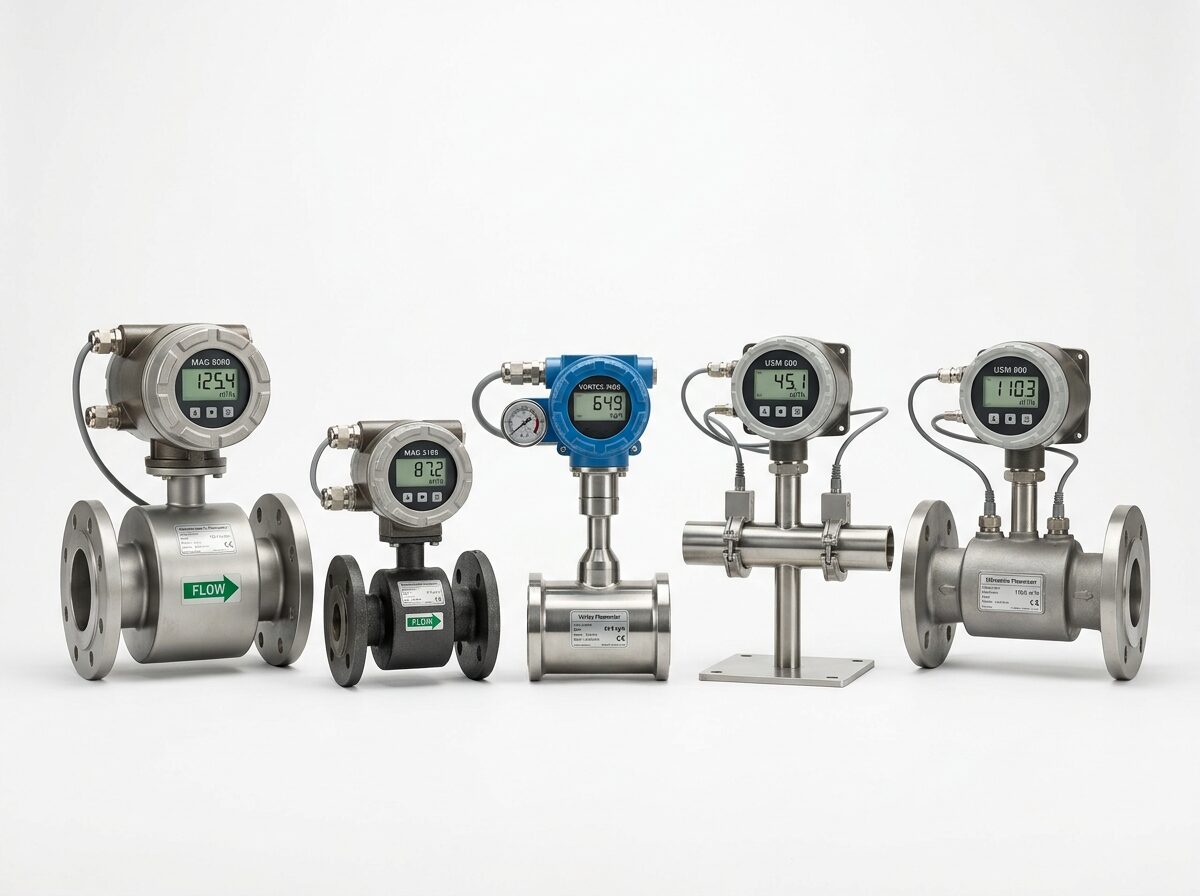
| Electromagnetic (Magmeter) | Faraday’s Law of Induction | Zero pressure drop, handles slurries/solids, high accuracy | Requires conductive fluid (>5 µS/cm); no hydrocarbons/gases |
| Vortex Flow Meter | Von Kármán Vortex Shedding | Universal for steam, gas, and clean liquids; robust | Vulnerable to piping vibration; requires high velocity |
| Transit-Time Ultrasonic | Acoustic Propagation Time Delta | Clamp-on non-invasive options, no pipe cutting | Sensitive to entrained bubbles, scale, and pipe lining decay |
| Coriolis Mass Meter | Oscillating Tube Phase Shift | Direct mass flow & density measurement, highest precision (±0.1%) | High initial capital expenditure, heavy in large pipe diameters |
When to Select an Electromagnetic Flow Meter
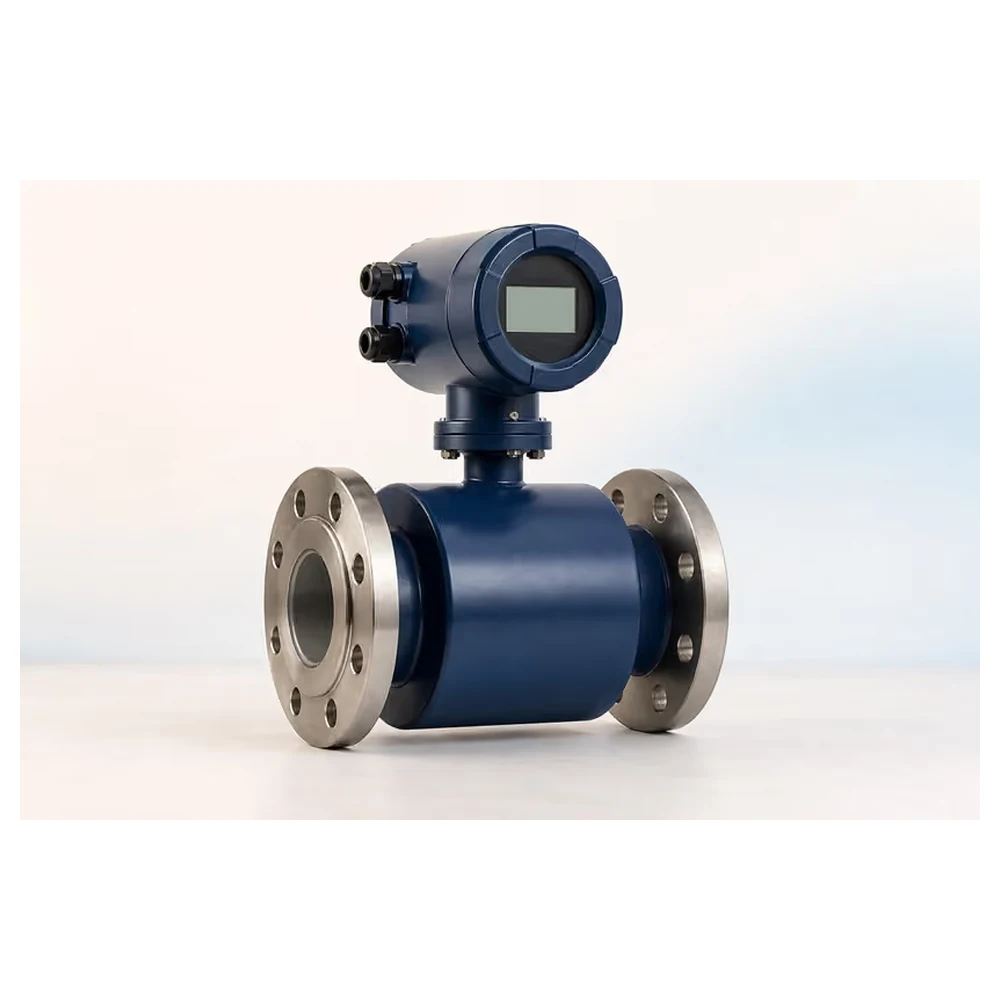
For municipal water distribution, industrial wastewater effluent, chemical batching of aqueous solutions, and abrasive mining slurries, the Electromagnetic Flow Meter (such as the Sky IA EMF-100 series) is the industry benchmark. Because the sensor creates an unobstructed bore with no moving parts, there is zero risk of mechanical jam or pressure loss across the measuring spool.