


RTDs and Thermocouples: The Twin Pillars of Thermal Sensing
Temperature is the most frequently measured physical variable across chemical processing, food pasteurization, metallurgy, and power generation. Selecting between a Resistance Temperature Detector (RTD) and a Thermocouple dictates the longevity, accuracy, and operational stability of your thermal loops.
Resistance Temperature Detectors (RTDs)
RTDs exploit the predictable positive temperature coefficient of pure metals, almost universally Platinum (Pt100 having 100 ohms at 0°C, or Pt1000 having 1000 ohms at 0°C). As temperature increases, electrical resistance increases in a highly linear and repeatable fashion.
- Temperature Range: Typically -200°C to +600°C.
- Accuracy: Class A (±0.15°C at 0°C) and Class 1/10 DIN (±0.03°C at 0°C).
- Stability: Unrivaled long-term drift stability (<0.1°C per year under normal cycling).
- Ideal For: Pharmaceutical cleanrooms, sanitary food batching, custody transfer thermal metering.
Thermocouples
Thermocouples operate via the Seebeck Effect: two dissimilar metal wires joined at one end produce a minute millivolt (mV) potential proportional to the temperature differential between the hot measuring junction and the cold reference junction.
- Temperature Range: From -270°C up to +1800°C (using Noble Metal types such as Type S/R/B Platinum-Rhodium).
- Response Speed: Significantly faster thermal response due to smaller junction mass.
- Mechanical Ruggedness: Extremely resilient against severe vibration, mechanical shock, and furnace flame impingement.
- Limitation: Inherently lower precision (±1.5°C to ±2.5°C) and prone to metallurgical drift over time.
Why Universal Transmitters (Like the TT-300) Are Essential
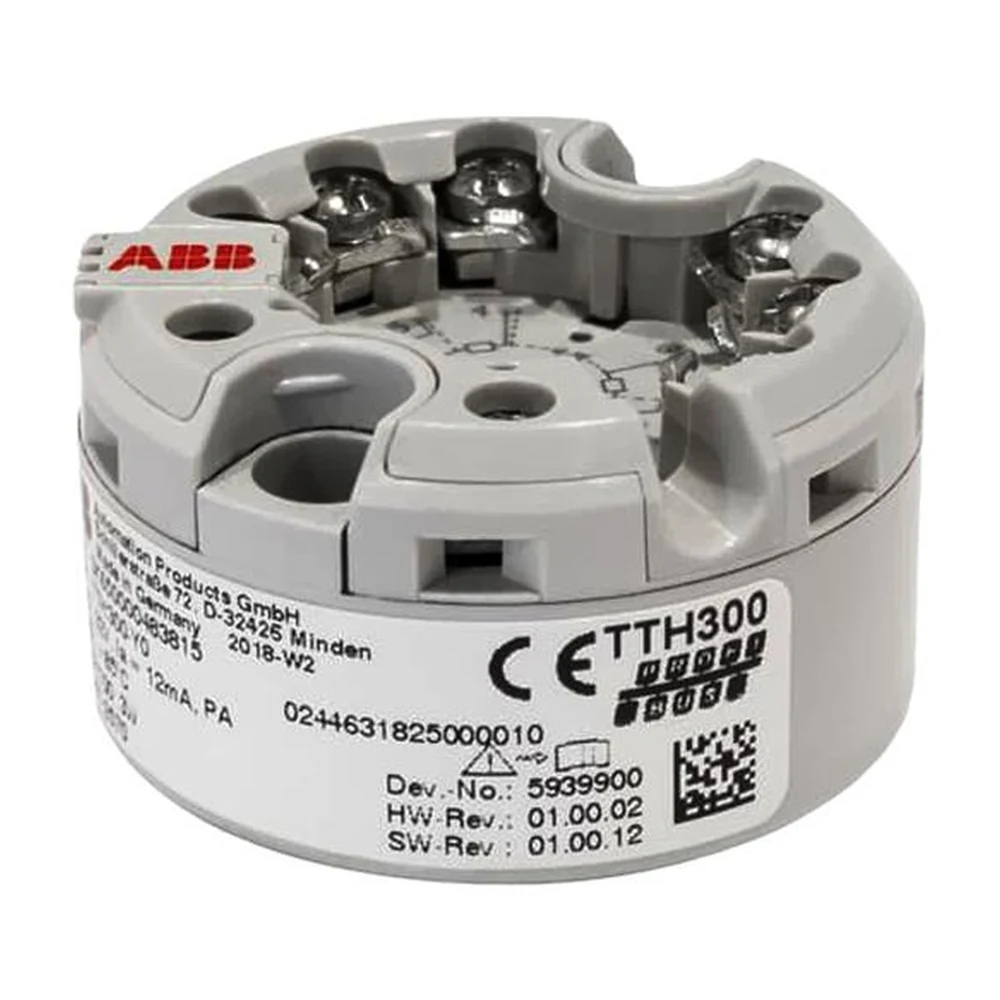
Instead of routing delicate millivolt thermocouple signals or 3-wire RTD resistance leads over long factory distances (which are highly susceptible to electromagnetic interference and lead-wire resistance drops), modern engineering standards mandate installing a head-mounted temperature transmitter (TT-300) directly on the thermowell. The transmitter converts the raw sensor input into a robust, isolated 4-20mA current loop or digital HART signal directly at the measurement point.